
Awards
APGI is proud to recognize Young Investigators and indivudual researchers.

Young Investigator Award
Every year, the “APGI Young Investigator Award” recognizes the most outstanding doctoral thesis in the field of Pharmaceutics, Biopharmaceutics and Pharmaceutical Technology. It is kindly sponsored by Sanofi. The “APGI YOUNG INVESTIGATOR AWARD” (sponsored by Sanofi) recognizes the most outstanding doctoral thesis in the field of Pharmaceutical Technology each year .
If you defended your PhD thesis between 15 October 2025 and the 30 November 2026, you can candidate for the 2027 “APGI YOUNG INVESTIGATOR AWARD”.
Please send a pdf file of your thesis (in French or English) and a short curriculum vitae, by November 30th, 2026, to APGI (apgi@apgi.org) and Florence Siepmann (florence.siepmann@univ-lille.fr). The file can be sent by We Transfer (a compressed version would be appreciated).
Thanks to the supervisors to forward this information to potentially interested former PhD students.
The price will be officially awarded at the 6th European Conference on Pharmaceutics, 6-7 April 2027 in Malmö, Sweden.
Latest laureate
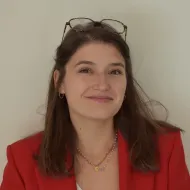
Dr. Claire Spitzlei – University Paris-Saclay
(France)Thesis: Formulation and validation of sonosensitive agents for ultrasound brain therapy
Supervisor: Dr. Nicolas Tsapis
The blood–brain barrier (BBB) prevents nearly 98% of drugs from entering the brain, representing a major obstacle in the treatment of brain diseases. To address this challenge, the combination of focused ultrasound and microbubbles (MBs) injection enables localized, reversible, and non-invasive opening of the BBB. This mechanism relies on the oscillations of MBs under ultrasound, which weakens BBB endothelial cell junctions. The field has expanded significantly, with ongoing clinical trials for the treatment of brain tumors, Alzheimer’s disease, and amyotrophic lateral sclerosis. However, their efficacy remains limited by the exclusive use of MBs initially developed for diagnostic purposes (SonoVue® or Definity®) and thus not optimized for therapeutic applications.
Developing optimized agents for brain therapy is a major multidisciplinary challenge. Conventional MBs suffer from rapid gas diffusion due to a low affinity between the gas core and the shell, leading to their clearance from circulation within minutes. In recent years, another type of agent has emerged: nanodroplets (NDs), composed of liquid perfluorocarbons (PFCs) encapsulated within a polymer or lipid shell. NDs can be converted into MBs using a low-amplitude ultrasound wave (acoustic vaporization), and then used to promote drug penetration into the brain. Although their in vivo lifetime is prolonged, NDs require high acoustic pressures to vaporize. To improve the stability and ultrasound sensitivity of these agents (MBs and NDs), it is possible to modify the gas/liquid core or the shell. The latter strategy is employed in this work, which aims to formulate new polymer agents (MBs and NDs) that are more stable, sonosensitive, non-toxic, and suitable for prolonged treatments.
The chosen polymer is derived from poly(malic acid) (PMA), a biodegradable polymer onto which fluorinated chains have been grafted to enhance fluorine-fluorine interactions between the MB (or ND) core and the shell. In the first part of the study, MBs were stabilized using this biodegradable polymer, varying the degree of fluorinated chain grafting. This new generation of fluorinated polymer MBs exhibited exceptional in vivo stability, ultrasound sensitivity, and a favorable safety profile for BBB-opening, making them highly suitable for therapeutic applications and for more efficient drug delivery to the brain. Further modifications to the polymer shell—PEGylation, molar mass, architecture, and lipid incorporation—were explored to investigate their impact on the physical and acoustic properties of the resulting MBs.
The second part of this work focused on NDs obtained by condensation of MBs, yielding particles in the sub-200 nm range. Their in vitro vaporization threshold was tuned based on polymer properties. This threshold was correlated with the effective and safe opening of the BBB in vivo, paving the way for precise control of acoustic thresholds through chemical engineering of the shell. These findings represent the first demonstration of polymer NDs with low-boiling point PFCs.
Previous laureates
-
Léa Guerassimoff, University Paris Saclay (France)2025
-
Helena Braet, Ghent University (Belgium)2024
-
Nevena Paunovic, ETH Zurich (Switzerland)2023
-
Céline Jaudoin, University Paris Saclay (France)2022
-
Raul Diaz Salmeron, University Paris Saclay (France)2021
-
Eline Teirlinck, Ghent University (Belgium)2020
-
Karen Peynshaert, Ghent University (Belgium)2019
-
Ranhua Xiong, Ghent University (Belgium)2018
-
Stephan Stremersch, Ghent University (Belgium)2017
-
Alice Gaudin, University Paris Sud (France)2016
-
Anne-Laure Laine, University of Angers (France)2015
-
Amrit Paudel, University of Leuven (Belgium)2014
Maurice Marie Janot Award
The Maurice-Marie Janot Award recognizes an individual researcher, also in the context of a team, for her/his contributions to the field of Pharmaceutics, Biopharmaceutics and Pharmaceutical Technology. It is gently sponsored by Sanofi.
The jury is composed of about 70 international members, known for their contributions to the pharmaceutical sciences.
The selection process: each jury member suggests candidates, based on their impact in the field of Pharmaceutics, Biopharmaceutics and Pharmaceutical Technology. A large variety of domains is covered, ranging from basic to applied pharmaceutical research, including for example drug delivery, dosage form manufacturing and characterization, bioavailability enhancement, process optimization, poorly soluble drugs, and biopharmaceuticals.
No restrictions are made with respect to nationality, origin (industry or academia) or specialization (pharmacist or others) of the nominee.
Latest laureate
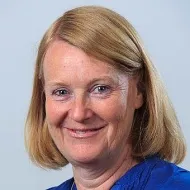
Prof. Véronique Préat
(Belgium)Pharmacist with a PhD in pharmaceutical sciences
Emeritus Full Professor – University of Louvain
Founded the Advanced Drug Delivery and Biomaterials group
Research focus on the development of advanced drug delivery systems for unmet medical needs
Publications: Authored over 350 articles and book chapters
Scientific Impact: H-index of 85 with over 31,500 citations
Recognition: Highly cited researcher from 2015 to 2023
Supervision: Supervised over 70 international PhD and post-doc students
Member of the Royal Academy of Medicine (Belgium)
Previous laureates
-
Peter Cullis (USA)2024
-
Jean-Christophe Leroux (Switzerland)2022
-
Robert Langer (USA)2020
-
Elias Fattal (France)2018
-
Richard Guy (United Kingdom)2016
-
Maria José Alonso (Spain)2014
-
Robert Gurny (Switzerland)2012
-
Nicolas A.Peppas (USA)2010
-
Patrick Couvreur (France)2008
-
Alexander Florence (United Kingdom)2006
-
Paolo Colombo (Italy)2004
-
Thomas Kissel (Germany)2002
-
Hans Junginger (The Netherlands)2000
-
Franck Puisieux (France)1998
-
Daan J.A. Crommelin (The Netherlands)1995
-
H. Sezaki (Japan)1992
-
Joe A. Robinson (USA)1989
-
Stanley A. Davis (United Kingdom)1986